Ingredients
- 2 tablespoons dried oregano, preferably Greek or Turkish
- 2 tablespoons sumac
- 2 tablespoons sesame seeds
- 1 tablespoon dried marjoram or additional oregano
- 1 tablespoon dried thyme
- 1 teaspoon fine sea salt
Instructions
- Simply combine all of the ingredients in a bowl or jar, and stir to combine.
- For enhanced flavor, warm the spices together in a medium skillet over medium heat, until fragrant and the sesame seeds are starting to turn golden. Remove from the heat and transfer to a bowl to cool. (Skip this step if you will be baking your za’atar on pita bread, which essentially does the same thing.)
- Store za’atar in an air-tight container at room temperature for up to 1 month.
Full Article
Learn how to make za'atar, the classic Middle Eastern seasoning, with this easy recipe. You'll need dried oregano, sumac, sesame seeds, marjoram and thyme.
12
Reviews Jump to recipe
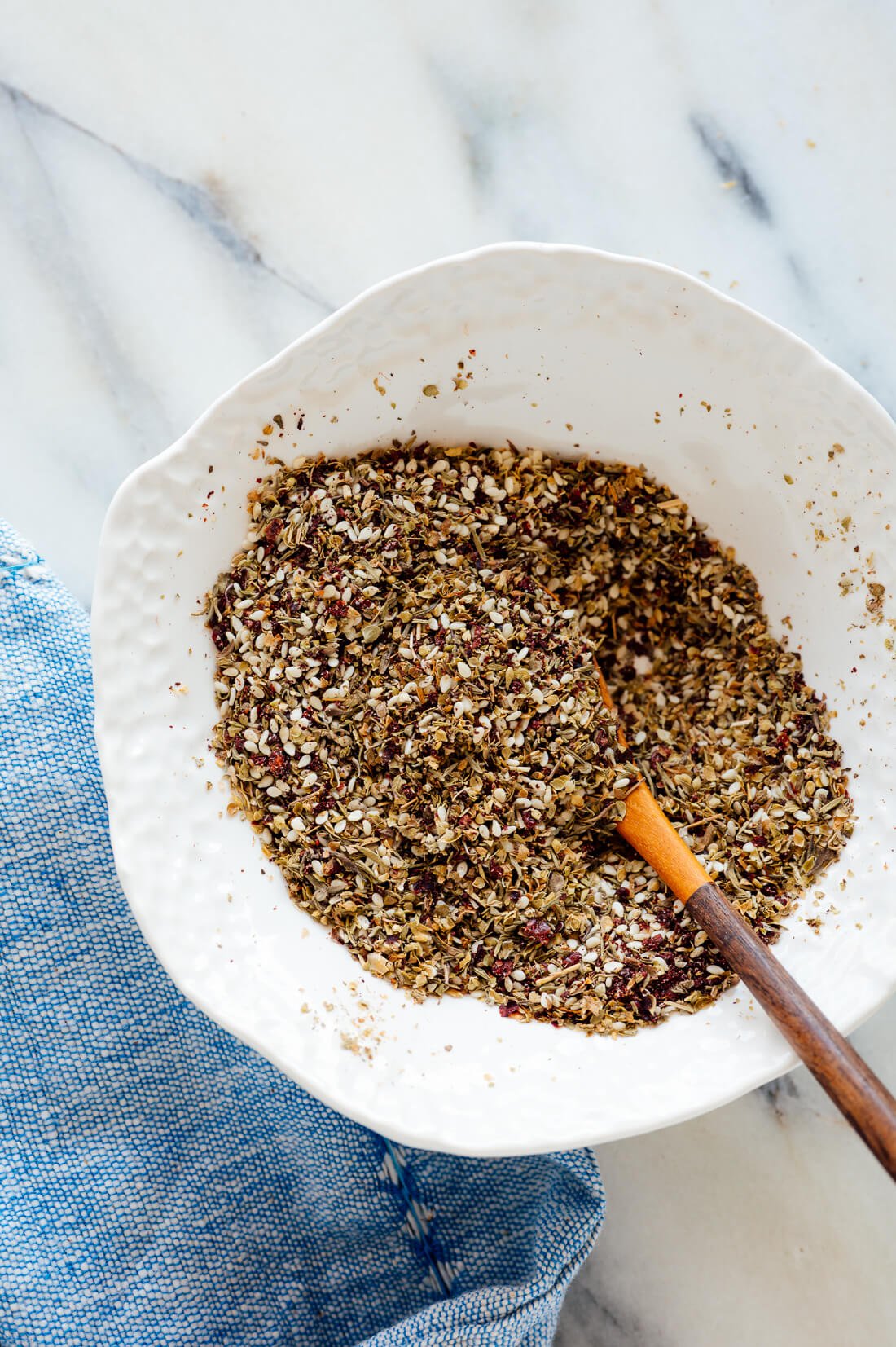
za'atar spice blend recipe
When you buy through our links, we may earn a commission. Learn More
I’m having a moment with za’atar, a classic Middle Eastern seasoning. Za’atar is a unique blend of herbal, earthy, savory, tangy and salty flavors.
Za’atar has been enjoyed for centuries on the other side of the world, yet it has gained popularity in the U.S. over the past five years or so. To be honest, I didn’t understand the fuss when I sampled a za’atar blend from Trader Joe’s several years ago. But then…
OUR VIDEOS
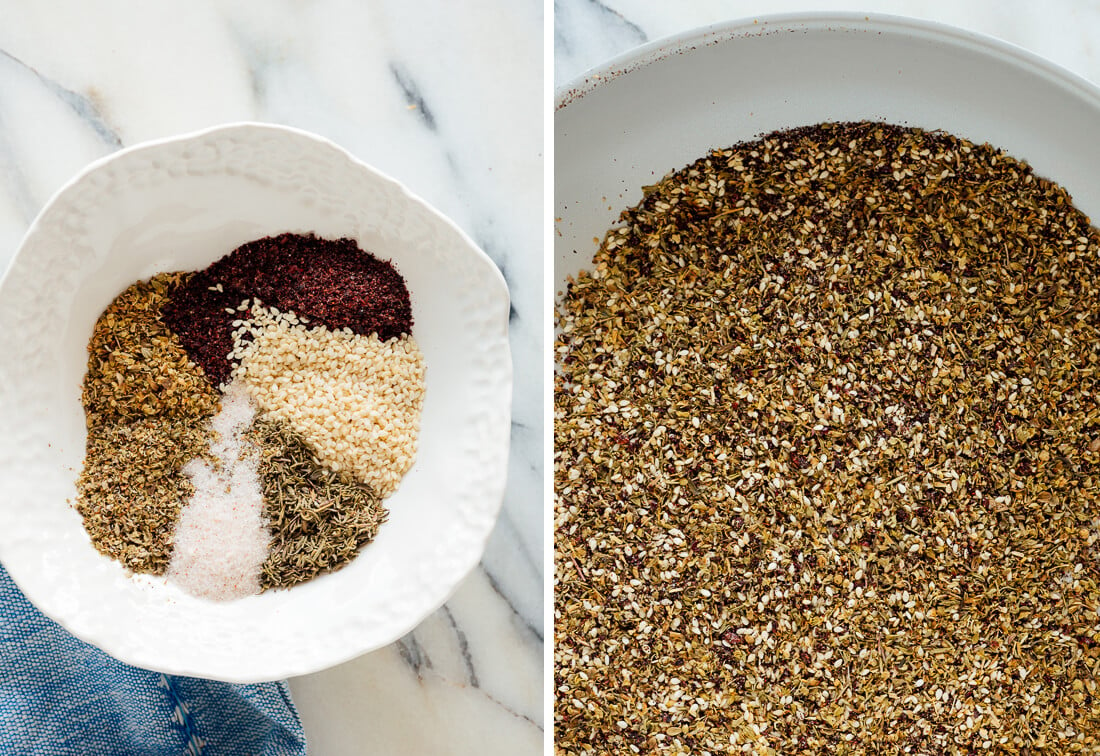
zaatar ingredients
Everything changed when za’atar landed on our table at Shaya in New Orleans. They simply mixed their house blend of za’atar with olive oil and served it with crusty bread, for dipping. I fell in love with za’atar that night, and couldn’t stop going back for more.
This recipe is my best attempt at recreating the flavors in Shaya’s recipe, and I think it’s pretty close. Za’atar is versatile and complements many savory meals—you’ll find all of my suggestions below.
Watch How to Make Za’atar Spice Blend
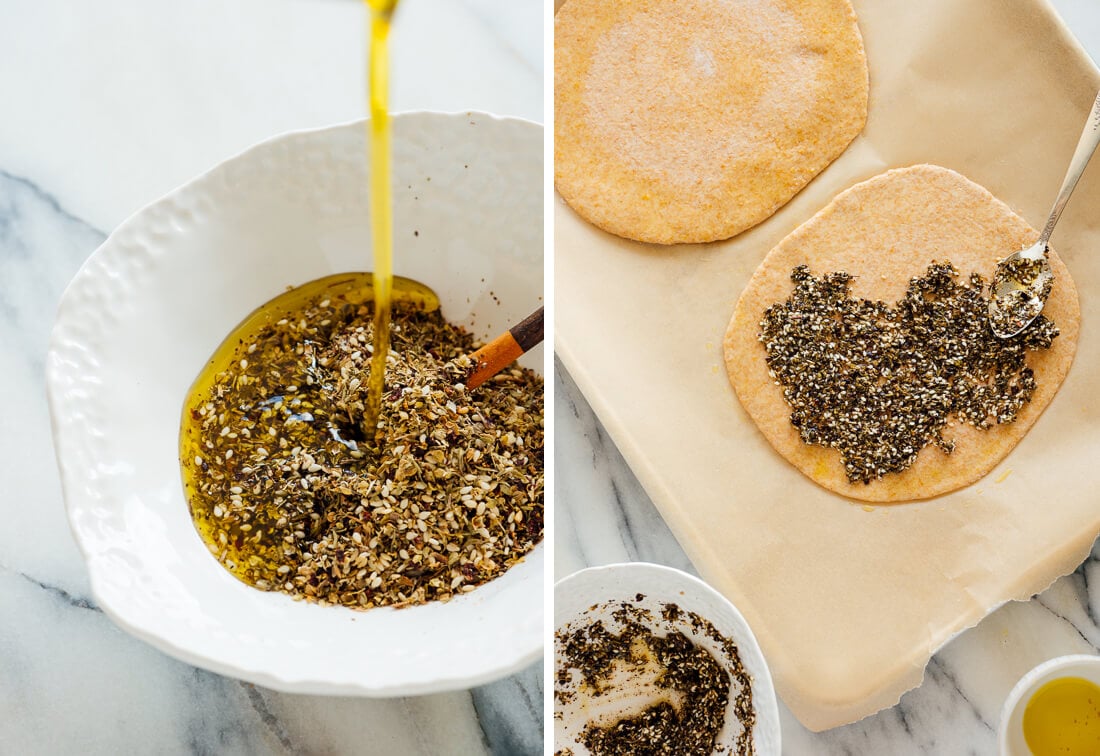
za'atar mixed with olive oil
Za’atar Ingredients
Za’atar recipes vary significantly from place to place and home to home (some are well-guarded family secrets). Za’atar’s origins are fascinating, and also confusing and contradictory. You can read about it all here.
Za’atar is known as “ brain food ” for its antioxidant and medicinal properties. This za’atar recipe is made with several ingredients that you probably have in your kitchen already! The one exception is sumac, but hear me out, it’s worth buying.
Here’s what you’ll need:
Dried Oregano
Preferably a Greek or Turkish variety, rather than Mexican.
Sumac
Sumac is one of my favorite spices. It’s bright, pinkish red, and has an irresistible tart, almost lemony flavor. You can sprinkle sumac on hummus, and it’s also irresistible on watermelon and cucumber with some flaky salt (the combination reminds me of Tajín seasoning). I buy sumac on Amazon (affiliate link).
Sesame Seeds
You won’t find sesame seeds in every za’atar recipe, but I don’t want za’atar without them! They become extra savory and delicious once toasted.
Marjoram
If you don’t have marjoram, you can replace it with more oregano (they’re cousins).
Thyme
Thyme rounds out the herbal flavors of oregano and marjoram.
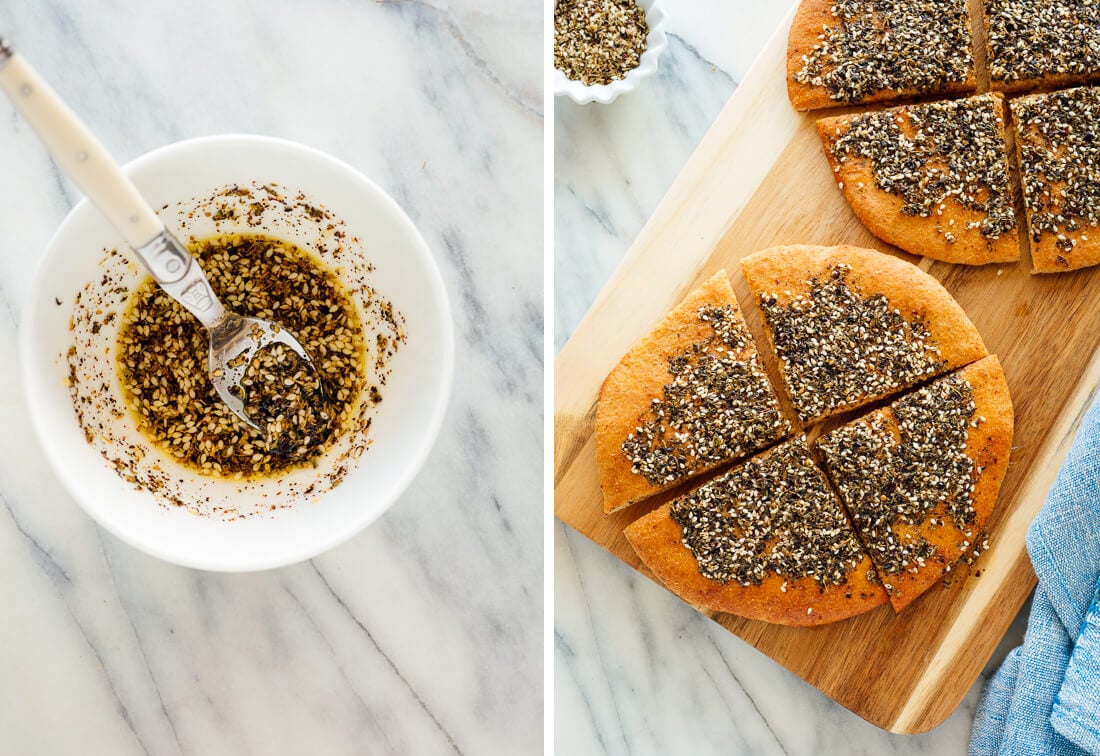
za'atar on pita bread
Uses for Za’atar
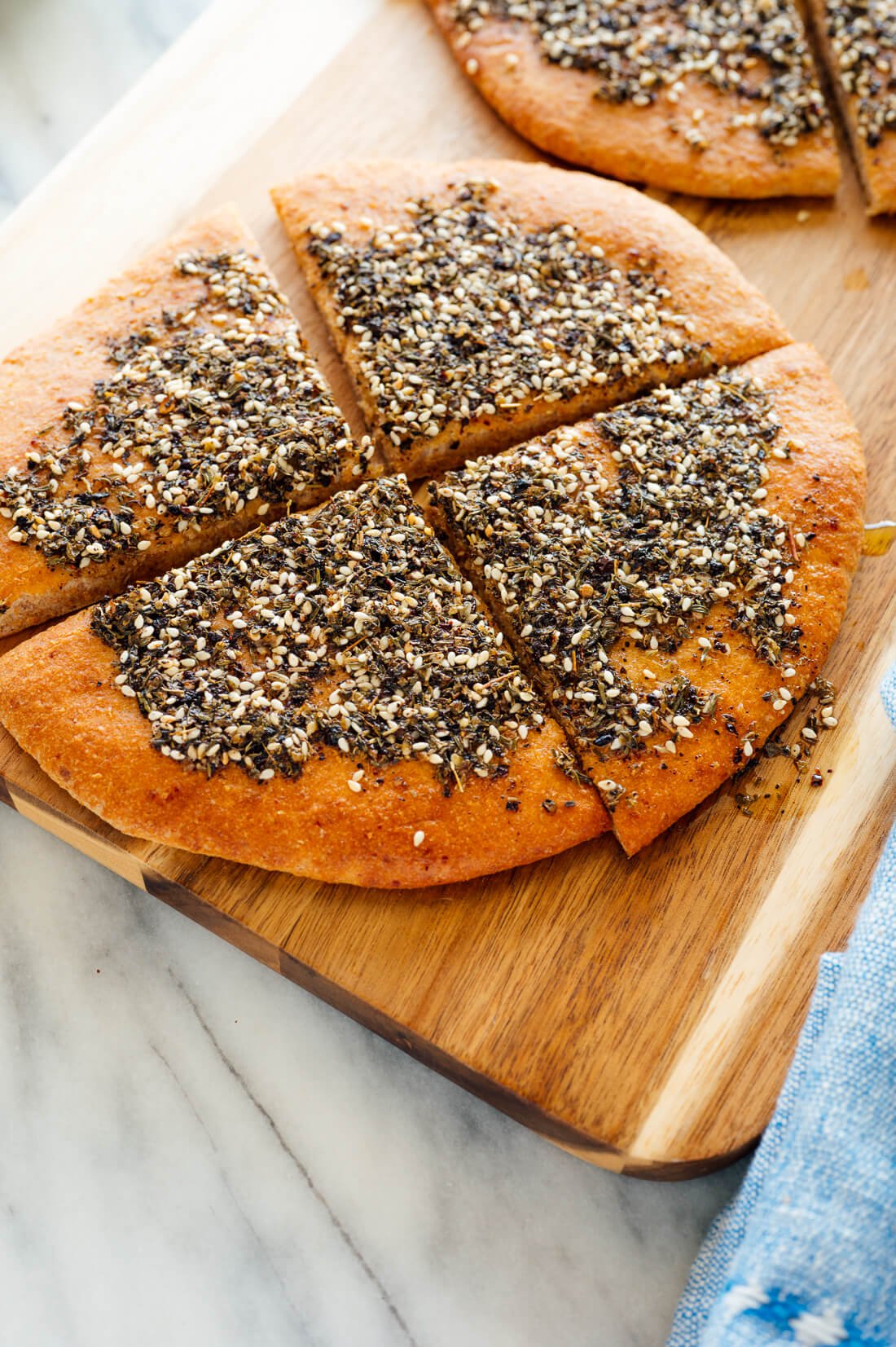
- Mix za’atar with olive oil and spread it over pita bread (or pita dough) before baking. This is called man’oushe. I don’t have my own pita dough recipe yet, but I used my go-to pizza dough divided to make four rounds, and it worked well.
- Serve bowls of za’atar mixed with olive oil and crusty bread, for dipping. Or more simply and perhaps more common, serve bread alongside a dipping bowl of olive oil and a separate bowl of dry za’atar.
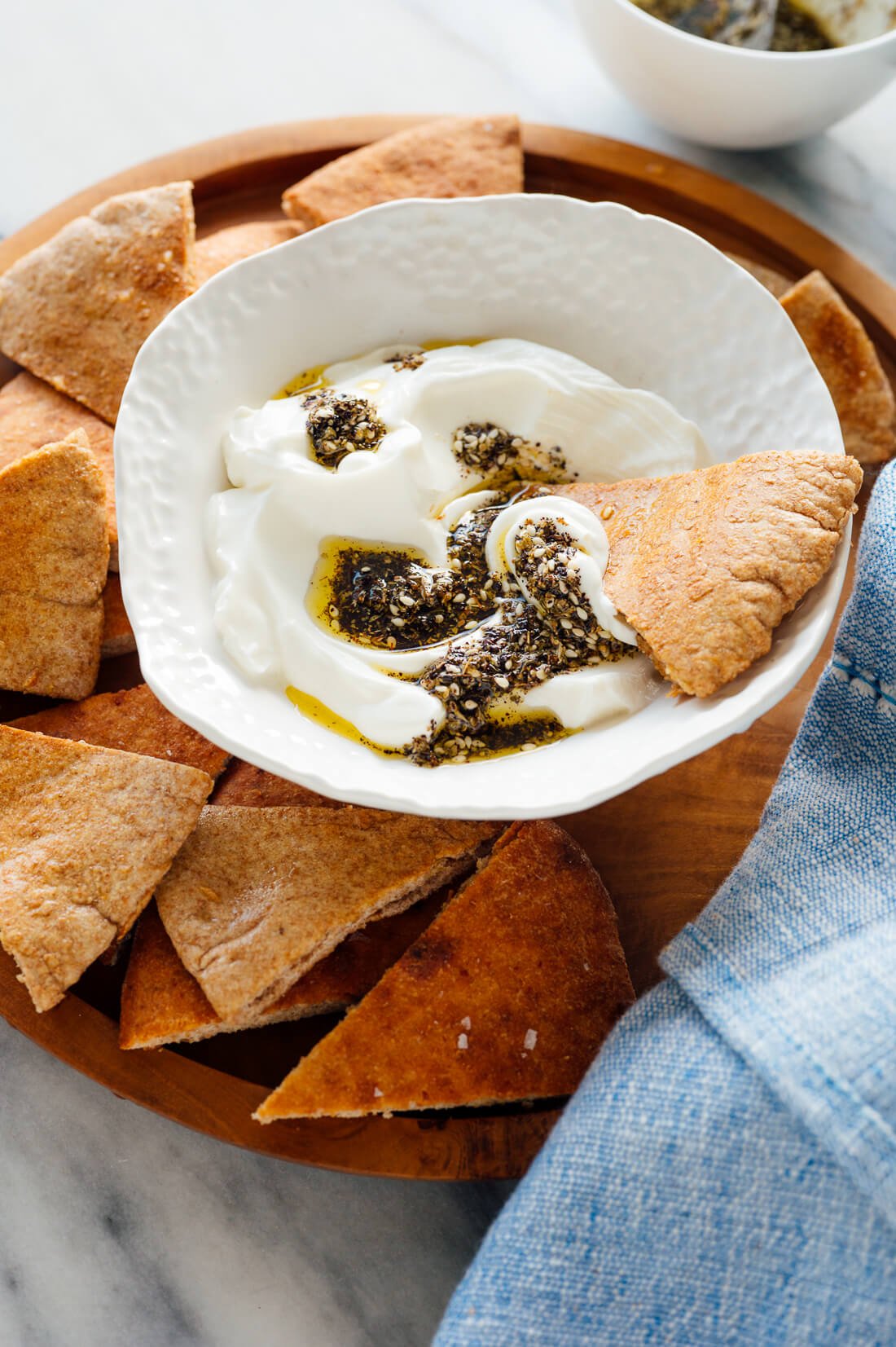
- Mix it with olive oil and drizzle it over labneh, thick yogurt (plain Greek or Siggi’s), hummus or baba ganoush. Serve it with pita wedges or raw veggies.
- Roll extra-thick rounds of labneh or a log of goat cheese in the dry spice mixture. Serve it as an appetizer with pita wedges, crackers or crisp, raw vegetables.
- Use the olive oil mixture as a marinade, or the plain spice blend as a dry rub. Za’atar would be great on grilled vegetables and kebabs.
- Incorporate za’atar in a salad, like Bon Appetit does with their tomato and pita crisp salad. See below for accompaniments.
Za’atar Goes Well With…
- Cauliflower
- Cucumber
- Dairy: Feta, goat cheese, labneh and yogurt
- Eggplant
- Fennel
- Fresh leafy herbs (parsley, mint and cilantro)
- Lemon or lime
- Pistachios
- Pita bread
- Potatoes
- Olive oil and olives
- Quinoa and rice
- Tomato
zaatar recipe
Love za’atar? Here are a few more of my favorite Middle Eastern recipes:
- Baba Ganoush: Smoky and irresistible eggplant and tahini dip.
- Dukkah: Egyptian nut and spice blend.
- Fattoush Salad with Mint Dressing: Fresh green salad with pita bread as “croutons.”
- Hummus: Seriously the most creamy hummus you’ll ever have.
- Mujaddara: Lentils and rice with caramelized onions on top.
- Shatta: Thick green hot sauce made with jalapeño, parsley, cilantro and walnuts.
- Tabbouleh: Bulgur salad with loads of fresh parsley.
- Tzatziki: Creamy, tangy, herbed cucumber and yogurt sauce.
Please let me know how your za’atar recipe turns out in the comments! I can’t wait to hear from you.
zaatar spice blend on labneh or yogurt
Za’atar Spice Blend
- Prep Time: 3 minutes
- Cook Time: 5 minutes
- Total Time: 8 minutes
- Yield: 1/2 cup
5 Stars 4 Stars 3 Stars 2 Stars 1 Star 4.9 from 12 reviews
Learn how to make za’atar, the classic Middle Eastern seasoning, with this simple recipe. You’ll need dried oregano, sumac, sesame seeds, marjoram (optional) and thyme. Recipe yields ½ cup and keeps for up to 1 month.
Ingredients
- 2 tablespoons dried oregano, preferably Greek or Turkish
- 2 tablespoons sumac
- 2 tablespoons sesame seeds
- 1 tablespoon dried marjoram or additional oregano
- 1 tablespoon dried thyme
- 1 teaspoon fine sea salt
Instructions
- Simply combine all of the ingredients in a bowl or jar, and stir to combine.
- For enhanced flavor, warm the spices together in a medium skillet over medium heat, until fragrant and the sesame seeds are starting to turn golden. Remove from the heat and transfer to a bowl to cool. (Skip this step if you will be baking your za’atar on pita bread, which essentially does the same thing.)
- Store za’atar in an air-tight container at room temperature for up to 1 month.
Notes
Recipe roughly adapted from Zaitoun by Yasmin Khan.
Serving suggestions: Mix za’atar with olive oil and spread it over pita bread (or pita dough) before baking. Or dip bread into olive oil, followed by a dunk into the za’atar blend. Mix za’atar with olive oil and drizzle it over labneh, Greek yogurt or hummus. Roll extra-thick rounds of labneh or a log of goat cheese in the dry spice mixture. Use the olive oil mixture as a marinade, or the plain spice blend as a dry rub.
Olive oil ratio: Two parts za’atar to one part olive oil will yield a thick, spreadable consistency. Equal parts yields a drizzly sauce.